

She Waited a Decade. Then She Made the Film She Actually Wanted.
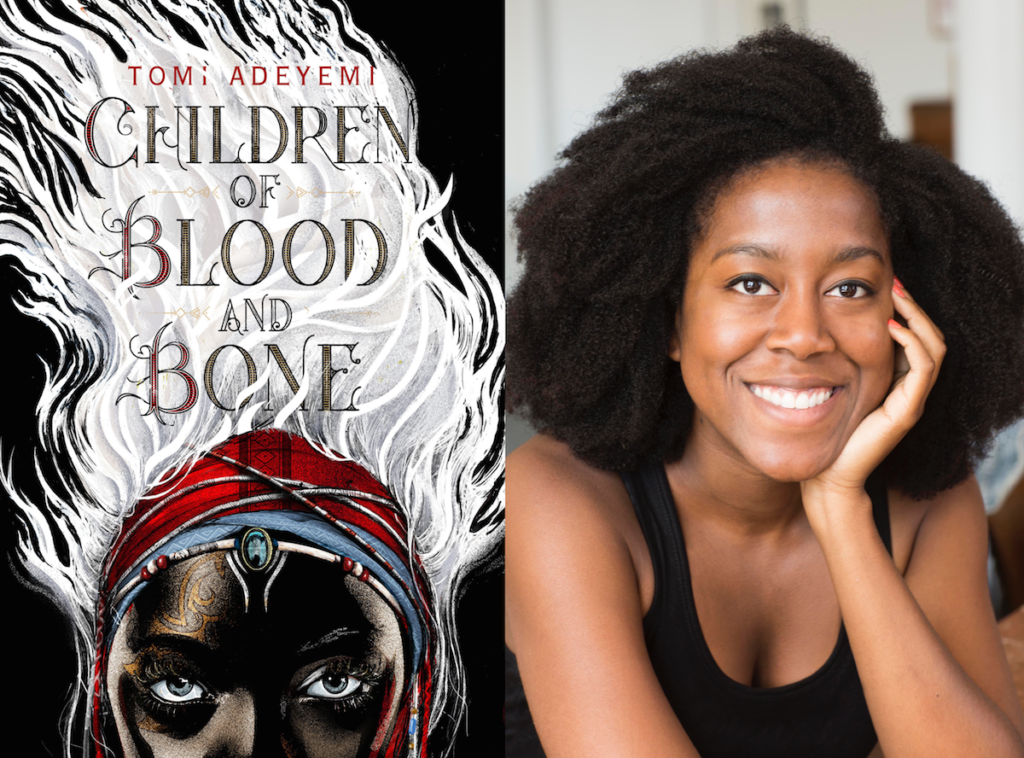
Tomi Adeyemi, author of Children of Blood and Bone
What Tomi Adeyemi’s fight to protect Children of Blood and Bone teaches every storyteller about the business of getting your story to the screen - the right way.
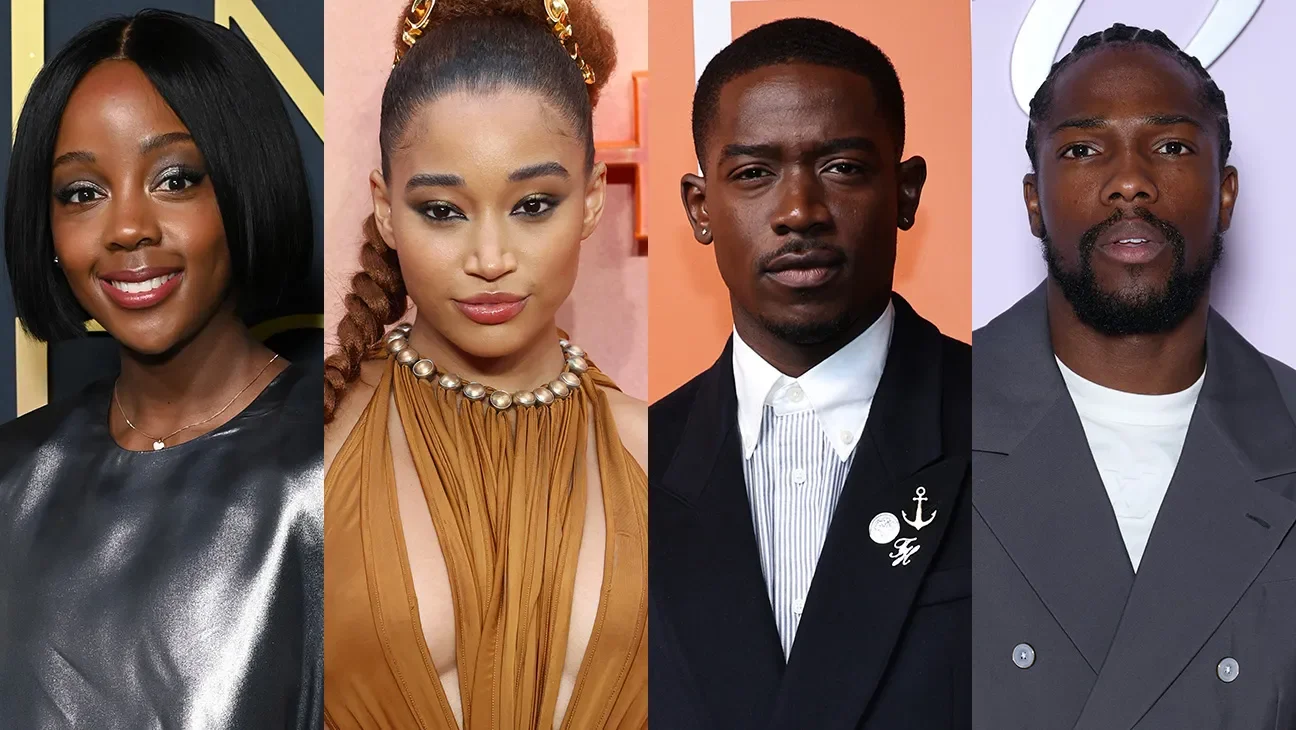
Thuso Mbedu (Zélie), Amandla Stenberg (Amari), Damson Idris (Inan), and Tosin Cole (Tzain) star in Gina Prince‑Bythewood’s 2027 IMAX fantasy Children of Blood and Bone.
Industry Analysis · IM Media
When Children of Blood and Bone hits IMAX screens on January 15, 2027, most audiences will see a breathtaking fantasy epic about a girl named Zélie Adebola fighting to restore magic to the kingdom of Orïsha. What they won't see — but what every serious storyteller needs to study — is the decade-long battle that happened before a single frame was shot.
This is not just a movie. It is a case study in IP ownership, creative leverage, and what it actually looks like when an author refuses to let her story be handled carelessly.
If you have a finished script, a book, a podcast, or an IP you're trying to get to the screen — keep reading. This story is for you.
How one novel survived three studios without losing its soul
Before Children of Blood and Bone was even published in 2018, it was already optioned. Fox 2000 Pictures and Temple Hill Entertainment moved fast, securing the film adaptation rights before the book hit shelves. That is how hot the property was. That is also where the complications began.
When Disney completed its acquisition of 21st Century Fox in 2019, Fox 2000 was shuttered — a casualty of a corporate merger that had nothing to do with the quality of the story. The project transferred to Lucasfilm, making it the studio's first original live-action project since the Disney acquisition. On paper, that sounds like a promotion. In practice, it was a slow stall.
Lucasfilm, preoccupied with Star Wars, Indiana Jones, and Willow, had little bandwidth for an African fantasy epic that didn't fit neatly into its existing IP architecture. Adeyemi reportedly grew frustrated with the pace of development and asked to serve as scriptwriter — a reasonable request from the person who created the world. Lucasfilm declined. When the studio's attention remained elsewhere, the film rights lapsed.
Fox 2000 + Temple Hill option the rights before publication. The property is that hot.
Disney acquires Fox. Fox 2000 is shuttered. Project transfers to Lucasfilm.
Lucasfilm stalls. Adeyemi asks to write the script. Lucasfilm declines. Rights lapse.
Paramount wins a competitive bidding war. Guaranteed theatrical release. Adeyemi writes and executive produces.
Gina Prince-Bythewood announced as director and co-writer with Adeyemi.
Production wraps after 74 shoot days across two countries and two islands.
IMAX release. The magic comes back.
"The rights lapsing — that's the moment most people overlook. It's the moment the story came back to its author."
By January 2022, Paramount had acquired the rights in a highly competitive bidding war, with a guarantee of an exclusive theatrical release. Adeyemi would write the script. Adeyemi would executive produce. The terms were not a consolation prize. They were the whole point.
IP protection isn't just owning the rights. It's having the leverage, the patience, and the strategic positioning to wait for the deal that honors what you've built. Most creators fold before that deal arrives. Adeyemi didn't.
The co-writer credit: why it matters more than you think
When Gina Prince‑Bythewood was announced as director in December 2023, the announcement came with a detail that serious industry observers noticed immediately — she would co‑write the screenplay with Adeyemi.
That is not standard. Most book‑to‑film adaptations involve the original author handing off the material and watching from a distance as someone else reshapes it for the screen. The author's voice becomes a reference point, not a presence. The story that emerges is an interpretation, not a collaboration.
Adeyemi's co‑writer credit changes the structural relationship between source material and screen adaptation entirely. The person who built the world of Orïsha — who understands the internal logic of the maji, the weight of Zélie's grief, the specific texture of what it means to have magic violently erased from your people — is in the room when every major creative decision gets made.
For screenwriters and IP owners alike, this is the model worth studying. The question is never just whether your story gets adapted. The question is whether the version that reaches the screen still carries the thing that made it matter in the first place.
Why Prince‑Bythewood's attachment changes the film's market position
Gina Prince‑Bythewood is not simply a talented director. She is a specific kind of director — one whose attachment to a project signals something to the market that no press release can manufacture.
Her 2022 film The Woman King demonstrated, with commercial clarity, that an action epic centered on Black women warriors could open wide, hold its audience, and generate real cultural conversation. It was not a niche film. It was not a prestige experiment. It was a blockbuster built on specificity — and it worked precisely because Prince‑Bythewood understood that specificity and scale are not in conflict.
When Paramount attached her to Children of Blood and Bone, they weren't just hiring a director. They were signaling market intent. This film is being positioned as an event: an IMAX release, a January 15 date that stands alone in the calendar, a franchise starter for a trilogy that has already sold nearly three million copies worldwide.
Prince‑Bythewood's presence answers the skeptic's first question before it's even asked: can an African fantasy epic built entirely on Black talent carry a global theatrical audience? She already answered that. The market responded. Now she's doing it again — at a larger scale, in a fully imagined world.
That director attachment is not an accident of casting. It is strategy. When you're packaging IP, the director choice is an argument about market viability before the film is made. Choose accordingly.
Hannah Beachler and Charlese Jones: world-building as argument
There is a version of this film where Orïsha feels like a backdrop — visually impressive, culturally adjacent, technically accomplished but emotionally hollow. That version exists in the adaptation graveyard alongside dozens of fantasy properties that looked expensive and felt empty.
The presence of production designer Hannah Beachler and costume designer Charlese Antoinette Jones is the structural guarantee against that outcome.
Beachler is the first African-American to win the Academy Award for Best Production Design, recognized for her Afrofuturist work on Black Panther and most recently honored for Sinners. She spent ten months in Cape Town building Orïsha from the ground up — not as decoration, but as argument. Her design philosophy treats world-building as cultural excavation: the spaces characters inhabit tell you who they are before anyone speaks a word. In Orïsha, where the erasure of magic is the erasure of identity, that philosophy is not an aesthetic preference. It is a narrative necessity.
Charlese Antoinette Jones brings the same intentionality to costume. What Zélie wears tells you what she has survived. What King Saran wears tells you what he fears. The visual language of Orïsha, built by Beachler and Jones together, is a co-authorship of the world Adeyemi created on the page.
"You are not seeing a production design budget. You are seeing two Black women who understand that representation is a craft decision made ten thousand times before the cameras roll."
The cast is the message
Thuso Mbedu as Zélie brings the same physical and emotional commitment she demonstrated in The Woman King — a film that required her to train like an athlete and perform like a veteran. She described this project as even more demanding, and said simply: "The girls will not be disappointed."
Viola Davis as Mama Agba, the oldest living maji, brings the specific gravity the role requires. Mama Agba is the keeper of memory in a world that has tried to erase it. There is no one working today who carries that weight more convincingly on screen.
Damson Idris, fresh from the Apple blockbuster F1, put it plainly: "The same feeling you had when you walked out of Black Panther is what you're gonna feel with this — but to an even greater extent. We're creating something you have not seen before."
Prince-Bythewood wrapped 74 days of production in June 2025 with a note to her cast and crew: "74 days. Two countries and two islands. A passionate and dedicated crew. And an extraordinary cast who gave EVERYTHING. And the journey has just begun."
What this film is really about — for the industry
The story of Zélie Adebola is a story about magic that was stolen and a generation that refused to accept the theft as permanent. She has one chance to reclaim what was taken, to strike against the forces that benefit from a world where her people have been made powerless.
The story behind the film is the same story.
Tomi Adeyemi watched her IP stall at three studios over nearly a decade. She asked for a co-writer credit and was refused. She waited. When the rights lapsed, she went back to market with more leverage, clearer terms, and a partner in Paramount willing to greenlight the film she actually wanted to make — not the one that was easier to manage.
The adaptation of Children of Blood and Bone is not a story about Hollywood finally getting it right. It is a story about a creator who understood that getting it right required her to stay in the room, protect what she'd built, and refuse to hand her world to people who didn't fully grasp what it was worth.
For anyone serious about the business of storytelling — whether you have a finished script, a book, a podcast, or a project that has been sitting in development longer than it should — that is the story worth studying.
January 15, 2027. IMAX. The magic is coming back.
The gap between where you are and where you want to be is not a talent gap. It's a positioning gap. At IM Media, we offer strategy, packaging, and direct industry access — the tools that convert a great project into a produced credit.
